

Are you planning to move to Germany for work, study, an Ausbildung, or to look for a job?
Then there’s one important thing you should know before arriving: health insurance (Krankenversicherung).
In Germany, health insurance isn’t optional. It’s a legal requirement for people living in Germany. But how does the German health insurance system work? And how much does it cost?
In this guide, I’ll explain the basics of health insurance in Germany and what you should know before starting your new life here.
WHAT Is Health Insurance in Germany?
Let’s start with the basics. Health insurance, or Krankenversicherung in German, helps cover medical expenses when you need healthcare. For example, health insurance may cover:
- Doctor appointments (Arztbesuche)
- Hospital treatment (Krankenhausbehandlung)
- Prescription medication (Medikamente)
- Dental treatment (Zahnbehandlung)
- Preventive check-ups (Vorsorgeuntersuchungen)
- Pregnancy and maternity care (Schwangerschaft und Mutterschaft)
However, not every medical service is completely free. Depending on your insurance, you may still need to pay certain co-payments or additional charges.
Germany has two main types of health insurance:
1. Gesetzliche Krankenversicherung (GKV)
This is statutory health insurance, often called public health insurance in English.
It covers most people in Germany, including many employees, students, and apprentices.
If you’re insured through the GKV system, you’ll be a member of a public health insurance provider, known as a Krankenkasse. Examples include TK, AOK, BARMER, and DAK.
2. Private Krankenversicherung (PKV)
There are two types of private insurance here in Germany.
- The PKV Germans are talking about are mostly for high income people, where they can save more money. We are not going to discuss about this here.
(if you guys are interested in this topic, comment down below, and I can make another post about this in the future😊)
- The private insurance I am going to talk about is more like a “Gap-filling insurance”. Maybe some of them would call it “Incoming- Insurance”. Unlike public health insurance, this is generally based on factors such as your age, health, and chosen coverage. Common providers are: Mawista, Dr.Walter….
⚠️ I don’t know if there is an official name for this “Gap-filling insurance” / “Incoming- Insurance”. I would just name it as “Incoming- Insurance” in the rest of the article.
Incoming Insurance is only sufficient if you are staying in Germany for a short period of time or for example an exchange semester. For longer stay, or mostly if you would like to work here (even just with a part-time job) Incoming Insurance is also not enough.
💡 Want to learn more about public health insurance providers? Check out our separate guide: What You Need to Know About Krankenkassen in Germany.
WHO Needs Health Insurance in Germany?
The short answer is: Everyone living in Germany needs a health insurance coverage.
This includes:
- Employees
- International students
- Auszubildende (apprentices)
- Self-employed people
- Job seekers, including Chancenkarte holders
- Family members living in Germany
However, the type of insurance you can or must have depends on your personal situation. For example:
- Employees: Most employees are required to join public health insurance, unless an exemption or different insurance arrangement applies.
- University students / Auszubildende (Apprentices) : Many students can join public health insurance, usually at a reduced contribution rate, generally costs around €140–€160 per month.
- Chancenkarte holders (like me): Job seekers entering Germany with a Chancenkarte also need a health insurance. In my case, because with a Chancenkarte, I am not eligible for a public insurance (TK, AOK…) I have to have an Incoming Insurance first to apply for my Visa. So I chose Dr. Walter because they offer insurance specifically for Chancenkarte holders.
💡 My tip: Don’t assume that travel insurance / Income Insurance is sufficient for your entire stay in Germany. A short-term travel policy may be useful when you first arrive, but it is not sufficient if you would like to stay in Germany longer.
WHAT Is the Difference Between Public and Incoming Health Insurance?
Understanding the difference between GKV and Incoming Insurance is one of the most important steps.
| Public (GKV) | Incoming Insurance | |
|---|---|---|
| Contributions | Generally income-based | Based on individual tariff and risk factors |
| Employer contribution | Usually shared with employer | You need to pay by yourself |
| Family insurance | Free for eligible dependents | Separate coverage usually needed |
| Medical billing | Usually directly billed | Often reimbursement-based |
| Coverage | Legally defined benefits | Depends on your contract |
| Switching | Usually easier between Krankenkassen | not suggested to switch |
Neither system is automatically better for everyone. For example, Incoming Insurance is generally cheaper, and they offer different coverage options. For people who is just staying for a short period of time, Incoming Insurance is a very good way to save money or to choose your coverage plan according to your needs.
However, like I already said, if you are planning to live long-term in Germany, simply with Incoming Insurance is definitely not enough.
Important: You don’t need an EU / German citizenship to be insured with public health insurance.
HOW MUCH Does Health Insurance Cost?
One of the most common questions newcomers have:
The cost depends on your insurance type and personal situation.
➡️ Public Health Insurance (GKV)
👩💻 Employees:
Public health insurance contributions are generally based on income. In 2026, the general contribution rate is 14.6%, plus an additional contribution called Zusatzbeitrag, which varies by Krankenkasse.
The officially announced average Zusatzbeitrag for 2026 is 2.9%. Employers and employees generally share these contributions equally.
Example:
If your gross monthly salary is €3,000 and your Krankenkasse charges a total rate of 17.5%:
- Total contribution: €525
- Employee’s share: €262.50
- Employer’s share: €262.50
This is a simplified example and does not include long-term care insurance (Pflegeversicherung).
👩🏫 Students and Job Seekers
Students eligible for statutory insurance usually pay special student contribution rates.
As of October 2026, public student health insurance (gesetzliche Krankenversicherung für Studierende) in Germany generally costs around €140–€160 per month, including mandatory long-term care insurance (Pflegeversicherung). The exact amount depends on your Krankenkasse, age, and whether you have children.
Job seekers and people without employment are normally not eligible for a public health insurance, when you first enter Germany.
➡️ Incoming Insurance
Incoming insurance works differently. Your monthly price depends on the contract you have with them.
💡 Want to learn more about this? Check out our separate guide: Health Insurance in Germany Without a Job: What You Need to Know.
WHEN Do You Need Health Insurance?
You should arrange your insurance before arriving in Germany. For many visa applications (like me), proof of adequate health insurance is required. I need to submit my insurance confirmation letter to apply for my Visa.
However, the exact requirements depend on your visa type. For example:
Student visa: You may need both Incoming Insurance and proof of public health insurance for your visa application. Why both?
👉 Many international students will arrive in Germany before their semester officially starts. They might want some extra time to register their address (Anmeldung), open a bank account, or simply settle into their new life. Meanwhile, your public health insurance may not start immediately when you arrive, which creates a gap that you are likely not insured. (I am explaining about the gaps right under!)
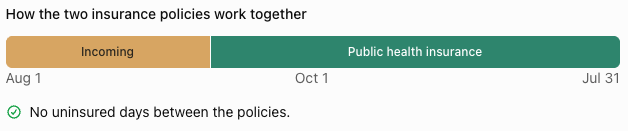
💡 Whether you actually need both insurances depends on your individual situation and the requirements of the German embassy or consulate where you apply. Always check the official visa requirements for your country of application before purchasing insurance.
Work visa: You need appropriate coverage from the beginning of your stay or employment, with any period before employment also covered.
Chancenkarte: You need insurance that meets the requirements for applying this visa.
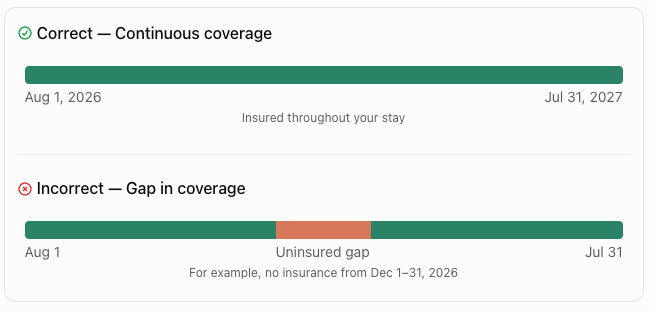
⚠️ Make sure there are no gaps in your insurance coverage.
Which means, your health insurance must cover every single day of your stay in Germany, without any days in between when you’re uninsured. For example, if you’re staying in Germany from August 1, 2026, to July 31, 2027, you need health insurance for that entire period. You cannot have days in between when you’re not insured.
💡 More tips to apply for a visa? Check out our separate guide: Health Insurance for a German Visa: What You Need to Know
HOW Do You Get Health Insurance in Germany?
The application process depends on whether you need statutory or private insurance.
Generally, the process looks like this:
Step 1: Check your eligibility
Find out whether you’re required or eligible to join statutory health insurance or whether private coverage is appropriate.
Step 2: Compare your options
Consider costs, coverage, customer service, and your long-term plans.
Step 3: Apply for insurance
Many providers allow online applications.
Step 4: Receive your insurance confirmation
You may need this document for your visa, employer, university, or residence permit application.
Step 5: Start using your insurance
If you join statutory health insurance, you’ll generally receive an electronic health insurance card (eGK).
Private insurance providers may have different procedures for medical bills and reimbursement.
💡 My tip: Before choosing a provider, make sure the insurance meets the requirements for your specific visa or residence status.
Final Thoughts
Health insurance is one of the most important things to arrange when moving to Germany.
Before choosing your insurance, remember these three things:
- Understand the difference between public and Incoming health insurance.
- Check which insurance system you’re eligible for.
- Make sure your coverage meets your visa and residence requirements.
Once you understand the German health insurance system, choosing the right provider becomes much easier.
If you’ve decided to join statutory health insurance but aren’t sure which Krankenkasse to choose, check out our separate guide:
What You Need to Know About Krankenkassen in Germany – TK, AOK, BARMER & More.
Frequently Asked
Is health insurance mandatory in Germany?
Yes. People living in Germany generally need appropriate health insurance coverage.
Is travel insurance enough?
Not always. Travel insurance may be suitable for certain short-term stays or transitional periods, but it may not meet the requirements for long-term residence.
Can foreigners join public health insurance?
Yes, many foreigners can join statutory health insurance. Eligibility depends on their individual circumstances.
Can I change from private to public health insurance?
Yes, this is possible. But you still need to check if you are eligible to be insured with public health insurance.
Is dental treatment included?
Many basic dental treatments are covered by statutory health insurance. However, some treatments, such as certain dental prostheses or cosmetic procedures, may involve additional costs.


Comments